.png)
We focus on the institutional, economic and human foundations that shape how systems function - including governance structures, incentives, coordination mechanisms and rules of the game.
Leadership, incentives, coordination and capabilities are treated as core operating conditions, not secondary considerations. They often determine whether solutions succeed or stall.
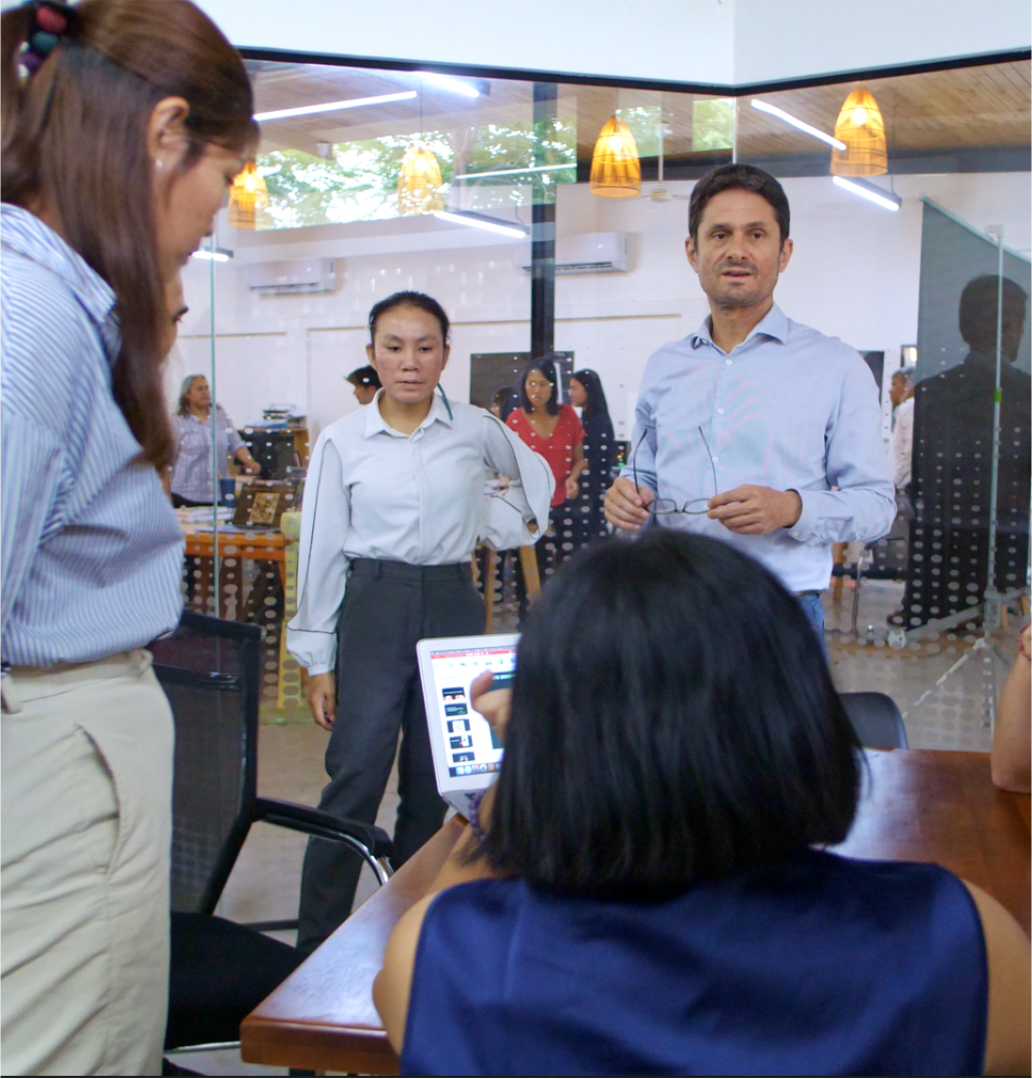
We use collective intelligence as an execution tool - aligning public institutions, financial actors, businesses and practitioners around shared priorities, trade-offs and implementable decisions.
We remain engaged through implementation to manage risks, adapt solutions to reality and ensure strategies and financing translate into tangible results.
Supporting governments to shape national strategies, sectoral pathways and reform priorities guiding long-term economic transitions.
Examples:
- Cambodia Climate Change Strategic Plan
- NDC stocktake and development
- National Electric Vehicle Roadmap-
- Green Economy and Finance Framework
- Feasibility study for a whole-of-government digital infrastructure (e-government)
.png)
Anchoring transitions in economic reality through competitiveness, productivity and value creation.
Examples:
–Analysis of how and where clean energy can support economic diversification and sector competitiveness
–Value-chain upgrading in agriculture and aquaculture through clean energy adoption
–Technical and economic feasibility studies in the waste and water sectors
–Sector diagnostics in garments, manufacturing and agro-processing
.png)
Translating strategies into financing by strengthening financial systems and mobilising capital for the real economy, including:
Examples:
– Capacity building for banks and MFIs
– USD 50m+ mobilised for SMEs
– Development of an SME support ecosystem roadmap and feasibility study for the Entrepreneurship Development Fund (MEF)
– Design of projects financed by international climate funds

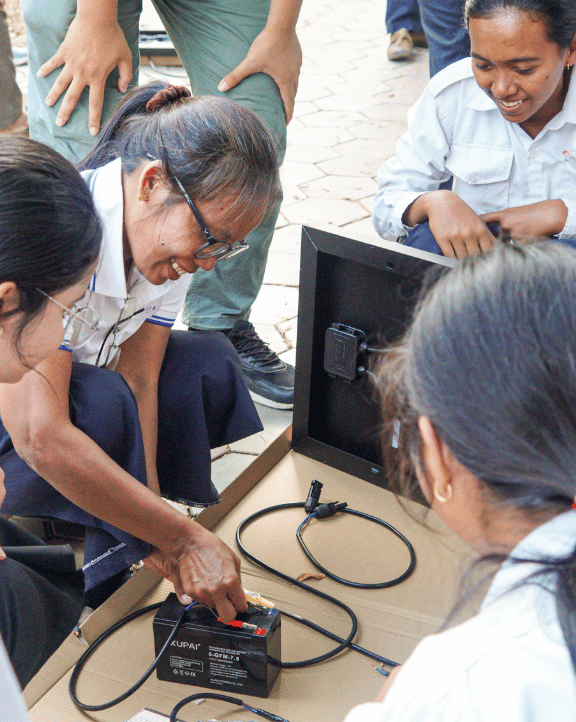
Turning strategies and finance into results through delivery support, capability building and real-world experimentation.
Examples:
- Behavioural change in buildings leading to significant energy reductions – Development and implementation of gender action plans for the national water utility
– Capacity building on textile recycling and resource efficiency in the garment sector
– Productivity and value-added gains through clean energy adoption in agriculture and aquaculture
– Supporting entrepreneurs and practitioners to develop and scale nature-positive solutions through capacity building, peer learning and ecosystem-based